In Western Kenya, something unsettling has taken root in the soil and it’s not a new crop. It’s uncertainty. Once, farmers and community members in Hamisi and Likuyani Sub counties of Vihiga and Kakamega Counties respectively; could look to the skies and know when to till the land, to plant, when to harvest, when to expect the timely showers that guided our seasons. Today, they guess. And too often, they guess wrong.
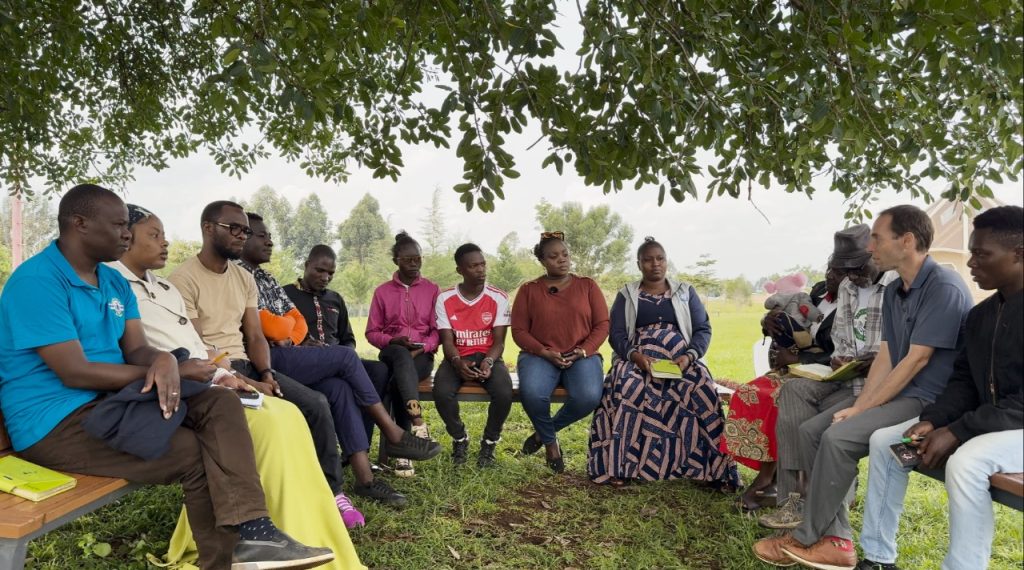
During a recent community roundtable; part of a broader, global conversation under this year’s Global Ethical Stocktake (GES) initiated by the COP Presidency; farmers, youth, and elders gathered to reflect not just on changing weather patterns, but on the ethical crisis beneath the climate crisis.
The Weather Has Changed. So Have We.
“We used to know when to till the land. The rains would come like clockwork,” shared one elder. “Now, they either come too late or too violently.”
Under the fig tree, this was a shared sentiment. Once viewed as a distant global issue, climate change now sets foot in local farmlands. Failed crops. Flooded fields. Withered livestock. Households in these farming communities have had to adapt, quickly and creatively. Maize; the region’s longstanding cash crop; has given way to short-cycle vegetables, sweet potatoes, and indigenous greens that demand less time and water.
Still, adaptation isn’t always rewarded. “People still prefer maize in the market,” a farmer lamented. “Even if we grow more nutritious, resilient crops, they don’t always sell.” A climate-smart field doesn’t always mean a climate-smart economy.
Culture Still Holds the Map
Amidst these modern challenges, age-old traditions continue to guide behavior toward nature. Certain trees in the region believed to be sacred or medicinal are traditionally protected and not used as firewood. In Luhya cultural rituals, specific plants once identified a clan or marked rites of passage. These were not just symbols. They were instructions coded messages from past generation, ancestral knowledge reminding communities to respect biodiversity and protect ecological balance.
Yet even here, wisdom and warning collide. The widespread planting of eucalyptus; fast-growing but thirsty; was called out as a dangerous misstep. “Eucalyptus has caused the region to become a green desert,” one elder said. “It looks like life, but it kills everything around it.”
The Moral Nuances that Bloom Justice
Participants also spoke of how values like truth-seeking and justice have helped the community confront these crises with courage. Through Preparation for Social Action (PSA) study groups, many began to reimagine farming not just as a technical task, but as a moral decision. New ways of thinking about land, water, and labor emerged not imposed from above, but developed from within.
When truth is sought actively and justice becomes a shared lens, even the most marginalized; women, young people, subsistence farmers; begin to see themselves not as victims of climate change, but as architects of resilience.
The Call Beyond the Grassroots
What emerged from this dialogue was more than a list of local grievances. It was an ethical blueprint. The people of Hamisi and Likuyani Sub counties are not waiting for solutions to trickle down from Nairobi or Geneva. They are living them. But they ask, and rightly so: Will the world listen?
If we are to take the Global Ethical Stocktake seriously, then the voices from rural Kenya; and places like it must not be footnotes. They must be central to climate policy, climate finance, and climate education.
What’s happening in Western Kenya is not just a local story. It is a mirror, held up to a world wrestling with how to live on a planet we can no longer predict. And the reflections are clear: the answers lie not just in carbon credits or global treaties, but in culture, community, and a renewed commitment to justice.